



Surviving Tryout Season: Advice, Mindset & Resources for Volleyball Athletes

Tryout season can be one of the most exciting—and stressful—times of the year. Whether you’re aiming for your first team or pushing for a competitive roster spot, the pressure to perform can feel overwhelming. The good news: you’re not alone, and there are tools to help you show up ready, resilient, and grounded.

To help you navigate tryouts with strength and perspective, our Mental Health AmbassadorsKyla Richey, Derek Thiessen, Shanice Marcelle and Akash Grewal—shared their best advice on performing under pressure and coping with setbacks.

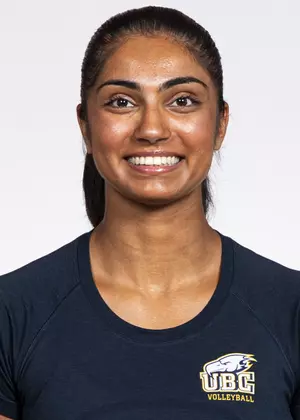
AKASH GREWAL - UBC WOMEN'S TEAM PLAYER & TEAM CANADA BEACH VOLLEYBALL PLAYER

1. Focus on What You Can Control

Kyla puts it clearly:  “When you show up stressed about who’s watching … you’re already playing from behind. Focus on your effort, your body language, and your communication — those three things will get you noticed immediately.”

Derek adds“Treat the tryout as a chance to showcase your effort and hard work — not as a test of your worth or whether you belong. Keep your sense of identity rooted in things outside of performance, stay present, and make space to have fun while competing.

Shanice suggests: “Give your best effort on the day, and show that you can be a great teammate (communicate, celebrate, shag balls when not in the drill).”

And Akash offers this tool:  “Going into tryouts, you’ll feel excitement, nervousness, fear… It is also very easy to let those emotions overcome you in the moment. Although these emotions are important, ask yourself if they are helping you in that moment. If we acknowledge these emotions, focus on our breath and bring ourselves back to the present space, it becomes easier to control these feelings.”

These align with one of our foundational resources — the Players Handout on Performance Anxiety  which explains how high pressure or perceived stress can reduce performance, and offers concrete steps to work with it. Key points from that handout include:

  • Recognize that anxiety in performance is normal and often comes from self-talk rather than the external situation. 

  • Use visualization, positive self-talk, controlled breathing, and focus on the task at hand rather than the outcome.

  • Create routines and rituals that help you stay grounded rather than reactive.

So when you arrive at tryouts, your goals might be: show high-effort, energize your teammates, stay present, and communicate effectively. These are within your control — leave the scoreboard and external judgments out of your energy.

2. Prepare Your Mind and Body

Physical prep matters (sleep, nutrition, hydration, warm-up) — but mental prep is equally important. 

Tips to consider:

  • Arrive early enough so you’re not rushing; a rushed arrival increases stress.

  • During warm-up, mentally rehearse plays: see yourself making good plays, communicating, recovering from mistakes.

  • Use a short breathing or visualization ritual: e.g., 2-3 deep breaths just before entering the gym to center yourself.

  • Before mistakes (or immediately after), remind yourself: “What’s next?” rather than “What just happened?” This keeps you task-oriented.

  • Show up with intention and presence.  Shanice says: “Whatever skills you feel are your strongest, do your best to highlight those. And in skills you may feel weaker in, show that you are willing to be coachable.”  Introduce yourself to the coaches if trying out for a new team, wear bright colours to stand out, and ask inquisitive questions.

  • Use the handout’s advice: when negative thoughts creep in, stop, focus on your breath, refocus on what you can control. Kyla adds: “most importantly… be YOU. Don’t try to be the flashiest person in the gym. Bring your strengths, be loud, be supportive, and play free. That’s when your best game comes out.”

DEREK THIESSEN - FORMER POST-SECONDARY ATHLETE & COACH

KYLA RICHEY - FORMER CAPTAIN OF THE WOMEN'S NATIONAL TEAM

3. Handling Setbacks With Strength

Not making a team or not making the “ideal” team can hurt—and our Ambassadors continuously stress that the way you respond matters more than if you were selected.

Kyla: “It’s not a definition; it’s feedback. Feel the disappointment (which is totally normal!), then ask: ‘What can I learn from this?’ I’ve seen players get cut one year and become starters the next. I’ve seen athletes go from overlooked to unstoppable – not because they magically got better, but because they handled adversity with curiosity and grit.”

Derek: “Let yourself feel the disappointment… Then evaluate rather than criticize yourself. Take what’s useful, let go of the rest.”

Akash: “Not making a team doesn’t necessarily mean ‘no’, but could mean ‘not yet’. I took the constructive feedback my coach gave me and used it to explore alternative options for pursuing the sport I loved at that time. Share how you’re feeling with people you trust… Remind yourself you are more than the sport you love.”

And tying back to performance anxiety: the handout points out that mistakes or errors are not what define you—it’s how you respond that builds resilience. 

If you experience a setback:

  • Take time to feel the disappointment.

  • Seek feedback: ask your coach/facilitator what you can improve.

  • Set a small action plan for the next cycle: one or two specific things you’ll work on mentally or physically.

  • Look for alternative pathways. Shanice says: “If you don’t make a team, maybe look to join drop in, skills or house league sessions. If you are injured, look for ways you can continually work on skills (modified reps, video review, try coaching or take a referee course).”

  • Keep perspective: your identity is broader than team selection and whatever challenge you may be facing, it is where you need to be in your own journey.

4. Explore the Extra Resources

SHANICE MARCELLE - PRO BEACH VOLLEYBALL PLAYER & POST-SECONDARY COACH

To support your journey, here are additional resources you should check out:

And of course, for full mental-health support, workshops and additional tools: 👉 Volleyball BC Mental Health Resources

Tryout season is a snapshot in time — but your growth, your mindset, and your resilience last far longer. The difference between “making” or “not making” a particular team often comes down to how you show up today and how you respond tomorrow.

Bring your best effort, control your controllables, recover from mistakes fast, lean on the resources you have, and remember: you are more than a tryout result.